Faith & Wisdom
What Happened at the Cross of Jesus?
One of the most captivating stories in the Bible is the life and death of Jesus Christ. You could argue the crucifixion of Jesus is the most tragic story of them all.
By PRAY.COM Editorial Team · Published · Updated · 6 min read
Share this
Key takeaways
- The crucifixion of Jesus occurred in first-century Judea, likely in either AD 30 or AD 33.
- The story of Jesus’ death and resurrection has been told many times, but there are some details you might not be aware of.
- While Jesus died for our sins, he also gave us grace, forgiveness, and devotional love, even to the end.
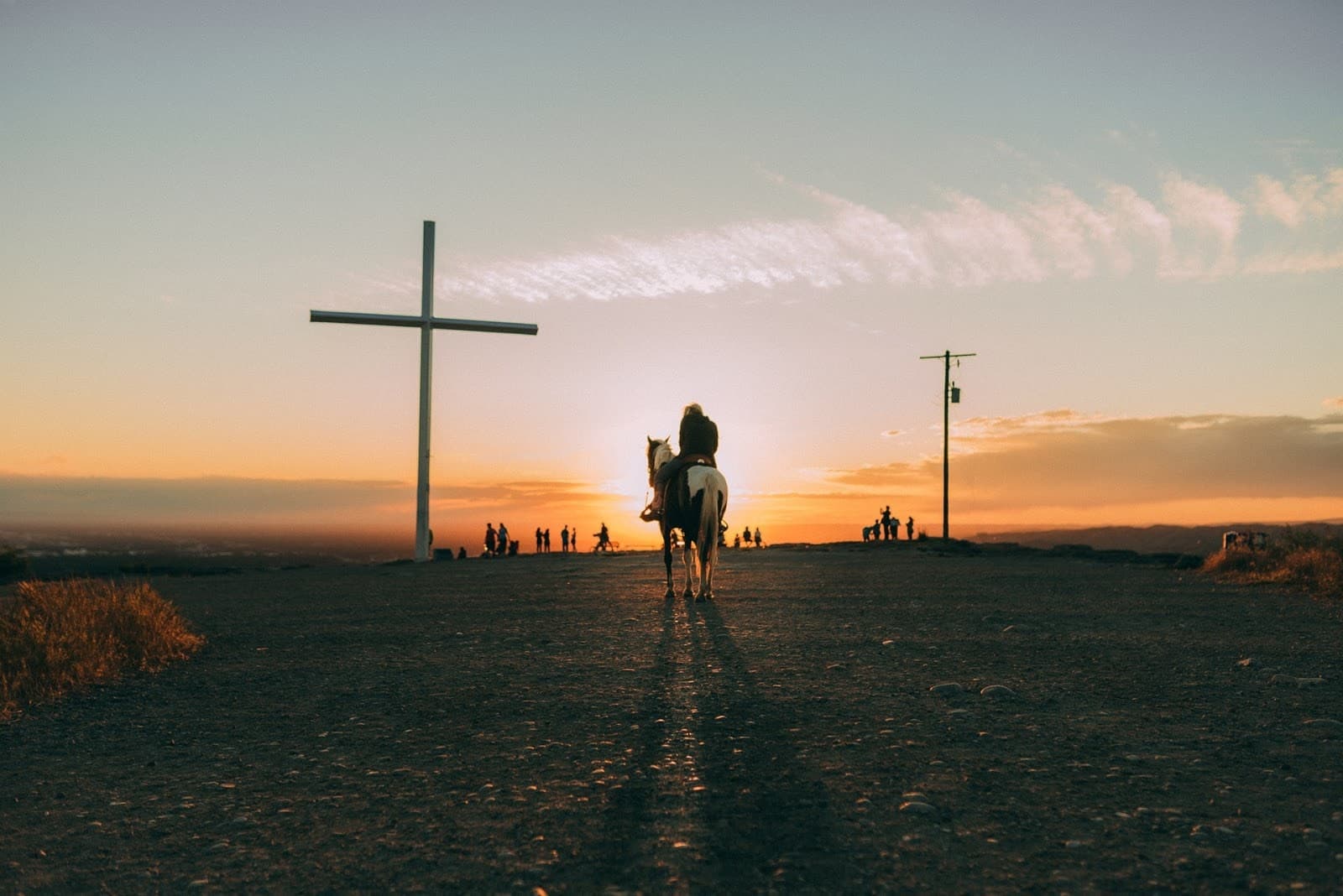
One of the most captivating stories in the Bible is the life and death of Jesus Christ.
You could argue the crucifixion of Jesus is the most tragic story of them all. There are many Christians and non-Christians who discuss the life of Jesus and his teachings, as well as his resurrection from the dead.
But what happened at the cross?
Our discussion today centers on what took place at the cross of Jesus, along with some facts about the crucifixion.
What led to the crucifixion of Jesus?
The word “crucifixion” comes from the Latin “crucifix,” or “crucifixus,” meaning “fixed to a cross.”
Not only was Crucifixion a deeply demeaning method of execution, but it was among the worst corporal punishments within the ancient world. However, one could argue that Jesus’ crucifixion was the most horrible, painful, and disgraceful of them all.
There are differing perspectives on the events leading up to Jesus' crucifixion among historians and Christians alike, although most start with the events of the Last Supper.
According to the Gospels, the Sanhedrin — which was an elite council of clergy and elders — arrested Jesus during the Jewish festival of Passover, deeply threatened by his teachings.
They brought Him before Pontius Pilate, who was the Roman governor of Judea at the time and tried Him for blasphemy. Among His crimes, the people claimed was declaring himself the King of the Jews or the Messiah of Jerusalem. With the sole authority to impose a death sentence, Pilate called for Jesus’ execution due to pressures from the crowd.
The gospels depict Pilate as a judge who is vacillating and uncertain, rather than the merciless ruler depicted by Philo and Josephus. According to Mark's gospel, Pilate defended Jesus before yielding to the demands of the crowd.
With the mob and those in authority demanding Jesus’ death, they had no choice but to crucify Him.
What happened at the cross of Christ?
The crucifixion of Jesus occurred in first-century Judea, likely in either AD 30 or AD 33. Jesus' crucifixion is described in the four canonical gospels referred to in the New Testament epistles.
The event is attested to by other ancient sources and established as a historical event corroborated by sources outside of Christianity. However, there is still some disagreement among historians as to the precise details.
It's hard to imagine how the cross was viewed in Jesus' time since two thousand years of Christian tradition have domesticated it to such an extent. Was it considered the cruelest way to die at the time or as mundane as hanging? For more information, check out this article that asks why focus on the cross?

Crucifixion has become almost synonymous with both shame and pain, and while we might think that we understand it, we simply cannot comprehend it as deeply as those living in the first century would have done.
What we do know is that they nailed Him to the wood by the hands and feet, with a crown of thorns affixed to His head. The Romans offered Jesus vinegar wine and mocked him while on the cross, while His followers cried and lamented his death. We also know that the soldiers stabbed Him multiple times after He had died to guarantee He'd passed away.
But what does the actual text from the Bible say about his death?
What the Bible says about the crucifixion
There isn't much detail in the Bible about the crucifixion itself. However, there are a couple of key pieces of information in the scriptures that tell us about what really happened.
As previously mentioned, during the trial of Jesus, Pilate was proclaiming His innocence. Interestingly enough, it was the people’s voices and not the rulers who cried for Jesus to be executed in the end.

In Luke 23:22-24, Pilate demanded three times, “‘Why? What crime has he committed? I have found no reason to sentence him to death. So I will have him flogged, and then I will release him.’ But the mob shouted louder and louder, demanding that Jesus be crucified, and their voices prevailed. So Pilate sentenced Jesus to die as they demanded.”
Imagine crying out for the execution of the man sent to save us from our sins. Even though many of Jesus’ followers, such as Mary Magdalene, cried at His feet while He hung there dying, there were still plenty of hecklers.
In Luke 23:32-34 the Bible says, “Two other men, both criminals, were also led out with him to be executed. When they came to the place called the Skull, they crucified him there, along with the criminals — one on his right, the other on his left. Jesus said, ‘Father, forgive them, for they do not know what they are doing.’ And they divided up his clothes by casting lots.”
Such divine love, to ask for God's forgiveness of your executors while dying. After all that humiliation, one feels amazed at how much grace and dignity Jesus showed even after such a horrifying experience.
Facts about the crucifixion
The story of Jesus’ death and resurrection has been told many times, but there are some details you might not be aware of.
Some of which include:
- Flogging or scourging was done before every crucifixion. The scourging was intended to bring a victim to a state just short of death. The whip had iron balls tied a few inches from the end of each leather thong on the whip. After a few lashes, the skin would be cut through, and the muscles would begin to be cut.
- Jesus carried the crossbar, also called a patibulum, from the flogging area inside the city to the crucifixion area outside the city walls. The upright part of the cross was permanently mounted in the crucifixion area, and the part that Jesus carried weighed 75 to 125 pounds.
- The crucifixion area was always outside the city because the process was horrible and disturbing to citizens.
- Jesus’ final hours on the cross lasted from approximately 9 a.m. to 3 p.m., a period of about six hours.
- Jesus’s last words included, "Father, forgive them, for they know not what they do," "Truly, I say to you, today you will be with me in paradise,” and "Father, into your hands I commit my spirit."
He died so we could live
While Jesus died for our sins, he also gave us grace, forgiveness, and devotional love, even to the end.
He is our savior and the son of God. His actions should serve as examples of how we should conduct ourselves in everyday life.
For more information about the cross of Jesus Christ, download the pray.com app in the iOS App Store or Google Play.
Quick answers
- What led to the crucifixion of Jesus?
- The word “crucifixion” comes from the Latin “crucifix,” or “crucifixus,” meaning “fixed to a cross.” Not only was Crucifixion a deeply demeaning method of execution, but it was among the worst corporal punishments within the ancient world.
- What happened at the cross of Christ?
- The crucifixion of Jesus occurred in first-century Judea, likely in either AD 30 or AD 33. Jesus' crucifixion is described in the four canonical gospels referred to in the New Testament epistles.
Keep reading
- New York Times Article: Finding God in the App StoreLauren Jackson explores the booming "faith tech" industry where tens of millions are using AI chatbots for spiritual guidance. The article examines apps like Bible Chat (30M+ downloads), Hallow, and PRAY.COM (25M downloads) that offer 24/7 digital chaplaincy services, raising questions about technology's role in religious practice.Faith & Wisdom · 6 min read
- You Have Not Because You Ask Not: Bible Verse ExplainedLearn about the meaning of James 4:1-3 with Pray.comFaith & Wisdom · 8 min read
- Meaning Of Rainbow In The Bible: Interpreting The Symbol Of HopeWhile we often associate rainbows with children's toys, their hopeful message dates back to the Book of Genesis. In this article, we want to help you understand that history better.Faith & Wisdom · 12 min read
- 10 Powerful Father's Day Prayers and BlessingsThe Power of Praying For the Dads in Your Life "A good father is one of the most unsung, unpraised, unnoticed, and yet one of the most valuable assets in our society." - Billy…Faith & Wisdom · 5 min read
- 10 Heartfelt Prayers for Friends: A Guide to Strengthening Bonds through FaithThe Power of Prayers in Friendship Friendship is a beautiful gift that enriches our lives with joy, support, and shared moments.Faith & Wisdom · 3 min read
- When Does Lent Start and End?The word Lent comes from an old English word, “lencten”, which means “spring season”. It is a time of religious observance, covering the 40 days from Ash Wednesday to Holy Thursday (Maundy Thursday).Faith & Wisdom · 6 min read
- The Beauty of Easter: A Journey of Resurrection, Redemption, and CelebrationEaster stands as a radiant celebration, echoing with profound significance in the hearts of Christians worldwide. In this article, we will thoughtfully explore the biblical origins, cherished traditions, and the immeasurable joy that Easter brings to believers.Faith & Wisdom · 3 min read
- What's Ash Wednesday? It’s Meaning and History ExplainedApart from Christmas and Easter, Ash Wednesday is one of the most attended Masses of the year for the Catholic Church.Faith & Wisdom · 6 min read
- Palm Sunday: Meaning, Story In The Bible, and Its Importance For ChristiansExplore the Biblical events that brought Jesus to Jerusalem as a Savior & King.Faith & Wisdom · 13 min read
- 2025 Easter Prayers: Your Prayer Guide2025 Easter Prayers: Your Prayer Guide Easter is a radiant celebration for Christians worldwide. It holds a profound significance rooted in the Christian faith.Faith & Wisdom · 5 min read